Anúncios
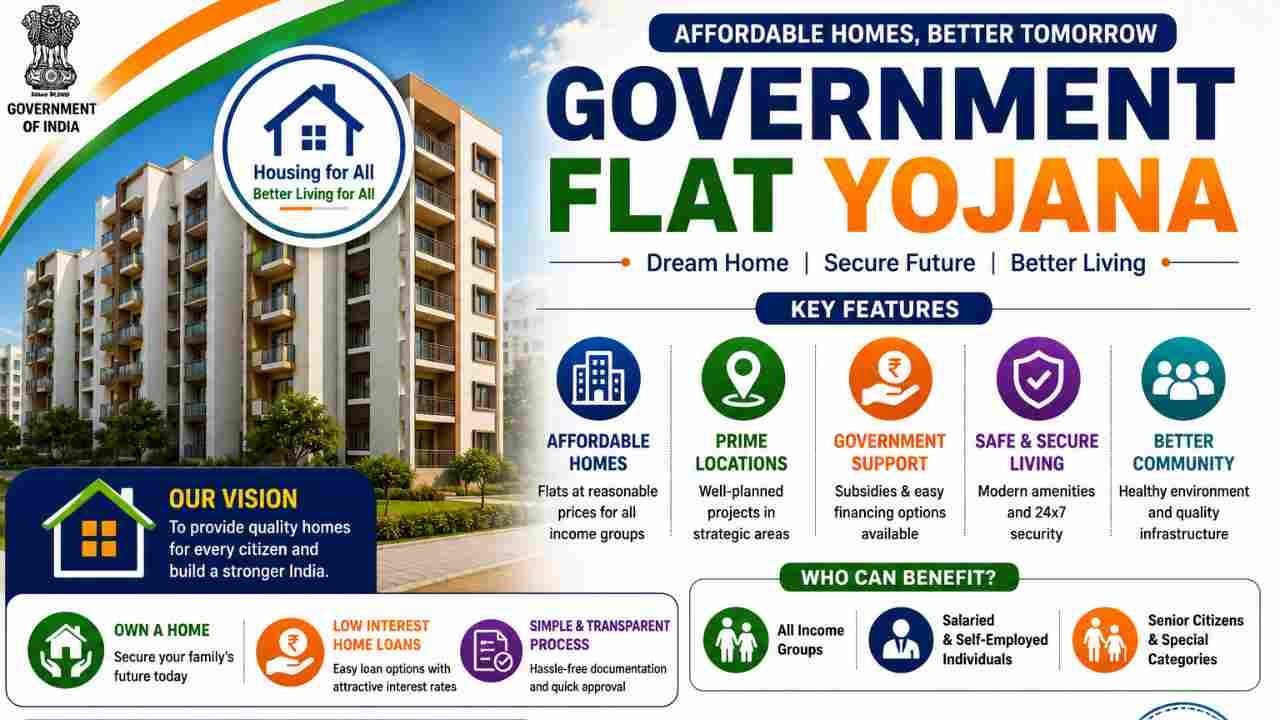
Ghar Yojana 2026 has become one of the most searched government welfare topics in India. Thousands of families from rural and urban areas are looking for information related to free house schemes, affordable housing support, online registration, beneficiary lists, subsidy benefits, and government housing assistance programs.
For economically weaker and low-income families, owning a permanent house remains one of the biggest life goals. To support such families, the Government of India and various State Governments continue to operate housing welfare schemes under different names and categories.
In 2026, the government has further strengthened housing schemes through digital verification systems, Aadhaar-based authentication, online beneficiary tracking, and direct financial assistance. Most housing-related welfare programs are linked with Pradhan Mantri Awas Yojana (PMAY), which aims to provide affordable and permanent housing to eligible citizens.
What is Ghar Yojana?
Ghar Yojana generally refers to government housing schemes designed to help eligible families obtain permanent houses or financial assistance for house construction.
Under these schemes, beneficiaries may receive:
- Financial support for house construction
- Subsidized housing
- Affordable flats or homes
- Home loan subsidy
- Rural housing assistance
- Urban housing support
The main objective is to improve living conditions and provide safe housing for poor and middle-income families.




Objective of Ghar Yojana
The government launched housing schemes to improve social and economic security for citizens.
Main objectives include:
- Housing for all
- Affordable housing access
- Better living standards
- Rural development
- Urban housing support
- Reduction of homelessness
- Improved sanitation and infrastructure
Housing is considered one of the most important welfare priorities in India.
Ghar Yojana 2026 Latest Updates
Several important updates have emerged in housing welfare schemes during 2026.
Latest developments include:
- New beneficiary verification drives
- Digital Aadhaar-based verification systems
- Expansion of rural housing projects
- Online application portals improved
- Faster subsidy processing systems
- Women co-ownership preference expanded
- Geo-tagging for construction monitoring
Governments are increasingly using digital systems to improve transparency and reduce fraud in housing schemes.
PM Awas Yojana and Ghar Yojana Connection
Most housing welfare programs in India are connected with Pradhan Mantri Awas Yojana (PMAY).
PMAY operates under two categories:
- PMAY Urban (PMAY-U)
- PMAY Gramin (PMAY-G)
These schemes help eligible citizens receive financial assistance and housing support.
PMAY Urban (PMAY-U)
PMAY Urban focuses on affordable housing for city residents.
Benefits include:
- Home loan interest subsidy
- Affordable housing projects
- Financial assistance
- Slum redevelopment support
Urban beneficiaries may receive housing subsidy support under different income categories.
PMAY Gramin (PMAY-G)
PMAY Gramin supports rural households that do not have permanent homes.
The scheme provides:
- Financial assistance for house construction
- Rural housing support
- Basic infrastructure development
- Direct bank transfers
The scheme mainly targets poor rural households living in temporary or unsafe housing conditions.
Eligibility Criteria for Ghar Yojana 2026
Eligibility conditions may vary depending on the scheme and state.
Common eligibility requirements include:
- Applicant must be an Indian citizen
- Family should not own a permanent house
- Aadhaar verification may be required
- Applicant must belong to eligible income category
- Valid bank account required
Priority may be given to:
- Women applicants
- SC/ST families
- Disabled persons
- Senior citizens
- Rural poor households
Income Categories Under Housing Schemes
Housing schemes often categorize applicants based on income.
Economically Weaker Section (EWS)
Designed for low-income families.
Low Income Group (LIG)
Suitable for families with limited monthly income.
Middle Income Group (MIG)
Middle-income families may receive interest subsidy benefits.
Income limits may vary according to government rules.
Benefits of Ghar Yojana
Housing schemes provide several major benefits to families.
Permanent Housing
Families receive safer and more stable homes.
Subsidy Support
Home loan subsidies reduce EMI burden.
Better Living Conditions
Improved housing leads to better hygiene and safety.
Financial Security
Home ownership improves long-term economic stability.
Women Empowerment
Many schemes encourage female ownership or co-ownership.
Financial Assistance Under Housing Schemes
Financial support depends on the type of scheme and location.
Rural Housing Assistance
Beneficiaries may receive:
- Construction support
- Installment-based payments
- Additional sanitation support
Urban Housing Subsidy
Urban applicants may receive:
- Interest subsidy on home loans
- Affordable housing benefits
- Reduced EMI burden
Documents Required for Ghar Yojana
Applicants generally need the following documents:
- Aadhaar Card
- Income Certificate
- Residence Proof
- Bank Account Details
- Mobile Number
- Passport Size Photograph
- Ration Card
- Property or land documents (if required)
Additional documents may be required depending on the scheme.
How to Apply for Ghar Yojana 2026?
Applications can usually be submitted online or offline.
Online Application Process
Step 1
Visit the official housing scheme portal.
Step 2
Select PMAY Urban or PMAY Gramin option.
Step 3
Enter Aadhaar details.
Step 4
Fill personal and family details.
Step 5
Upload required documents.
Step 6
Submit the application form.
Step 7
Save application number for tracking.
Verification is completed by government authorities.
Offline Application Process
Applicants can also apply through:
- Panchayat offices
- Municipal offices
- Housing departments
- Common Service Centres (CSC)
- Local government offices
Offline support remains important for rural applicants.
How to Check Ghar Yojana Beneficiary List?
Beneficiaries can check their status online.
Beneficiary Status Check Process
- Visit official portal
- Select beneficiary search option
- Enter registration number or Aadhaar details
- Choose state and district
- View beneficiary status
Common status messages include:
- Under Verification
- Approved
- Pending
- Fund Released
- Rejected
Aadhaar and Digital Verification in 2026
Housing schemes now use advanced digital verification systems.
New systems include:
- Aadhaar authentication
- Online document verification
- Geo-tagging of houses
- Direct bank transfer systems
- Digital beneficiary tracking
These systems aim to improve transparency and reduce fake applications.
Women Ownership Benefits
The government continues promoting women ownership under housing schemes.
Benefits include:
- Increased financial security for women
- Joint ownership support
- Priority in some applications
- Improved social empowerment
Many houses are registered in the name of women beneficiaries.
Importance of Affordable Housing
Affordable housing improves overall quality of life.
Benefits include:
- Better sanitation
- Improved health conditions
- Safer living environment
- Increased social stability
- Better educational opportunities for children
Permanent housing also improves family security and confidence.
Common Problems Faced by Applicants
Many applicants still experience challenges during the process.
Verification Delays
Document checks may take time.
Aadhaar Errors
Incorrect Aadhaar details may create approval issues.
Land Ownership Problems
Applicants may face legal or documentation issues.
Fund Release Delays
Installment payments may sometimes be delayed.
Construction Challenges
Material costs and labour shortages can affect house completion.
Tips for Ghar Yojana Applicants
- Keep Aadhaar details updated
- Use official government portals only
- Upload accurate documents
- Save application number safely
- Maintain active bank account
- Avoid fake agents and scams
Proper documentation is essential for successful approval.
Beware of Fake Housing Scams
Many fake websites and agents claim to guarantee housing approval.
Important precautions:
- Never pay unofficial fees
- Verify government notifications carefully
- Avoid fake registration links
- Confirm application process through official portals
- Do not share OTPs with strangers
Government housing approvals are processed only through authorized systems.
Rural Housing and Development
Rural housing schemes are helping improve village infrastructure and living conditions.
Benefits include:
- Better sanitation
- Improved electricity access
- Cleaner living spaces
- Safer housing structures
Housing construction also generates local employment opportunities.
Public Reactions and Ground Reality
Housing schemes are generally appreciated by low-income families because they directly improve living conditions.
Positive reactions include:
- Better housing security
- Improved social status
- Financial support for poor households
- Safer homes for families
However, some applicants report delays in verification, fund release, and construction support.
Experiences may vary depending on the region and local implementation systems.
Future of Housing Welfare Schemes in India
The government is expected to continue expanding affordable housing programs.
Future focus areas may include:
- Smart affordable housing
- Green housing initiatives
- Faster digital approvals
- Expanded rural housing
- Improved urban infrastructure
- AI-based verification systems
Housing remains one of India’s most important social welfare priorities.
Important Advice Before Applying
Before applying for any housing scheme:
- Verify eligibility carefully
- Check all documents properly
- Read scheme guidelines fully
- Understand subsidy conditions
- Monitor official announcements regularly
Applicants should always rely on official government information.
Conclusion
Ghar Yojana 2026 and related government housing schemes continue to provide major support to economically weaker and low-income families across India.
Through PMAY Urban, PMAY Gramin, and various state housing programs, the government is helping citizens access affordable and permanent housing with subsidy and financial assistance support.
Digital verification systems, Aadhaar integration, women ownership policies, and rural housing development are making these schemes more transparent and accessible.
Eligible citizens should regularly check beneficiary lists, complete verification requirements, and apply only through official government portals to receive housing benefits successfully.
For Gramin
PM Awas Yojana Gramin 2026: New Beneficiary List, Eligibility, Online Apply & Rural Housing Updates
Pradhan Mantri Awas Yojana Gramin (PMAY-G) 2026 continues to be one of the most important rural housing welfare schemes in India. Millions of families living in villages and rural areas are searching for information related to the PMAY Gramin beneficiary list, eligibility criteria, online registration, installment payments, house approval status, and latest government updates.
The Government of India launched PMAY-G to provide permanent houses to poor and homeless families living in rural areas. Under the scheme, eligible beneficiaries receive financial assistance directly in their bank accounts to build pucca houses with basic facilities.
In 2026, the government has expanded digital verification systems, Aadhaar authentication, geo-tagging technology, and online beneficiary tracking to improve transparency and speed up housing approvals. PMAY-G remains one of the largest rural housing schemes in the country.
What is PM Awas Yojana Gramin?
Pradhan Mantri Awas Yojana Gramin (PMAY-G) is a rural housing scheme launched by the Government of India to provide permanent houses to poor rural households.
The scheme mainly targets families who:
- Do not own a pucca house
- Live in kutcha houses
- Are economically weaker
- Belong to rural poor categories
The objective of the scheme is to improve living standards in villages and provide safe housing to deserving families.
PMAY Gramin 2026 Latest Updates
Several major updates have been introduced under PMAY-G in 2026.
Latest developments include:
- New rural housing verification drives
- Updated beneficiary lists
- Aadhaar-based digital verification
- Faster installment release systems
- Geo-tagging for construction monitoring
- Online status tracking systems
- Increased focus on unfinished rural houses
The government is working to identify rural families who still do not have permanent housing facilities.
Objective of PMAY Gramin
The main purpose of PMAY-G is to ensure “Housing for All” in rural India.
Key objectives include:
- Permanent housing for rural poor
- Better sanitation and hygiene
- Improved living conditions
- Reduction in homelessness
- Rural infrastructure development
- Financial support for house construction
The scheme also helps improve overall village development.
Who Can Get Benefits Under PMAY Gramin?
PMAY-G mainly supports poor rural households.
Eligible categories may include:
- Homeless families
- Families living in kutcha houses
- SC/ST households
- Landless labourers
- Economically weaker rural families
- Rural workers and labourers
Selection is generally based on SECC (Socio-Economic Caste Census) data and local government verification.
PMAY Gramin Eligibility Criteria 2026
To receive benefits under PMAY-G, applicants usually need to fulfill certain conditions.
General Eligibility Conditions
- Applicant must be an Indian citizen
- Applicant must live in a rural area
- Family should not own a permanent house
- Aadhaar verification may be mandatory
- Applicant should belong to eligible rural category
Priority may be given to vulnerable and poor households.
Who May Not Be Eligible?
Families may become ineligible if they:
- Own a pucca house
- Have higher income status
- Own certain vehicles or large property
- Are government employees in some cases
Eligibility is verified through official records and local surveys.
PMAY Gramin Financial Assistance 2026
Under PMAY-G, beneficiaries receive financial support for house construction.
Assistance Amount
Financial assistance varies depending on location:
- Plain areas receive one category of support
- Hilly and difficult areas may receive higher support
Funds are usually transferred directly into beneficiaries’ bank accounts through DBT (Direct Benefit Transfer).
Installment Payment System
PMAY-G payments are generally released in installments.
Common stages include:
- First installment after approval
- Second installment during construction
- Final installment after completion
Geo-tagging and physical verification are often used before releasing payments.
PMAY Gramin House Features
PMAY-G houses are designed to improve rural living conditions.
Features may include:
- Permanent roof structure
- Basic sanitation facilities
- Electricity connection support
- Better ventilation
- Safer construction
Many houses are also linked with rural sanitation and electrification programs.
Women Ownership Priority
The government gives special importance to women ownership under PMAY-G.
Benefits include:
- Houses often registered in women’s names
- Joint ownership encouraged
- Better social and financial security for women
This policy aims to strengthen women empowerment in rural areas.
Documents Required for PMAY Gramin
Applicants usually require the following documents:
- Aadhaar Card
- Ration Card
- Income-related documents
- Residence proof
- Bank account details
- Mobile number
- Passport size photograph
Additional verification may be required by local authorities.
How to Apply for PMAY Gramin 2026?
Applications can be processed through local rural authorities and official systems.
Online Application Process
Step 1
Visit the official PMAY-G portal.
Step 2
Enter Aadhaar and personal details.
Step 3
Fill family and housing information.
Step 4
Upload required documents.
Step 5
Submit application form.
Step 6
Save registration details for future tracking.
Offline Application Process
Many rural applicants apply through:
- Gram Panchayat offices
- Block development offices
- Rural housing departments
- Common Service Centres (CSC)
Local officials may help beneficiaries complete applications.
How to Check PMAY Gramin Beneficiary List 2026?
Beneficiaries can check their names online in the updated rural housing list.
Beneficiary List Check Process
- Visit official PMAY-G website
- Select beneficiary search option
- Enter registration number or Aadhaar details
- Select state, district, and village
- View approved beneficiary list
If the applicant’s name appears, they may qualify for housing benefits.
PMAY Gramin Status Check
Applicants can track application progress online.
Status Check Steps
- Open official portal
- Enter registration number
- Verify details
- Check current status
Common status messages include:
- Under Verification
- Approved
- Installment Released
- Construction Ongoing
- Completed
- Rejected
Aadhaar and Geo-Tagging in PMAY-G
The government now uses digital systems to improve transparency.
Important technologies include:
- Aadhaar verification
- Geo-tagging of houses
- Digital beneficiary records
- Mobile-based inspections
- Direct bank transfers
Geo-tagging helps authorities monitor actual construction progress.
Rural Development Through PMAY-G
PMAY-G contributes significantly to rural development.
Benefits include:
- Improved village infrastructure
- Better sanitation
- Safer housing
- Increased local employment
- Better health conditions
Construction activities also support rural labour and local economies.
Common Problems Faced by Beneficiaries
Some beneficiaries face challenges during approval and construction.
Verification Delays
Document verification may take time.
Aadhaar Errors
Incorrect Aadhaar details can delay payments.
Land Issues
Applicants without proper land records may face problems.
Delayed Installments
Fund release delays may affect construction progress.
Construction Cost Increases
Rising material costs may create financial pressure.
PMAY Gramin and Rural Employment
The scheme also supports local employment because house construction generates work for:
- Labourers
- Masons
- Construction workers
- Material suppliers
This indirectly benefits village economies.
Tips for PMAY-G Applicants
- Keep Aadhaar details updated
- Maintain active bank account
- Submit accurate documents
- Track beneficiary status regularly
- Complete construction on time
- Avoid fake agents and scams
Applicants should always follow official guidelines.
Beware of Fake Housing Scams
Many fake agents and websites claim guaranteed approvals.
Important precautions:
- Never pay unofficial fees
- Verify information through official sources
- Avoid fake registration links
- Do not share OTPs
- Use only government-authorized portals
Government housing approvals are processed only through official systems.
Public Reactions and Ground Reality
PMAY-G is widely appreciated in rural India because permanent housing directly improves living standards.
Positive impacts include:
- Better safety during weather conditions
- Improved sanitation
- Increased dignity and security
- Stronger rural infrastructure
However, some beneficiaries report delays in approvals, installment release, and local verification processes.
Experiences may vary depending on region and local administration.
Future of PMAY Gramin
The government is expected to continue expanding rural housing programs.
Future focus areas may include:
- Faster digital approvals
- Improved rural infrastructure
- Smart rural housing
- Better sanitation integration
- Green and sustainable housing
- AI-based monitoring systems
Rural housing remains a major national development priority.
Important Advice for Rural Applicants
Before applying:
- Verify eligibility properly
- Keep all documents ready
- Maintain correct bank details
- Follow construction guidelines carefully
- Monitor official beneficiary lists regularly
Applicants should always rely on official government information.
Conclusion
Pradhan Mantri Awas Yojana Gramin 2026 continues to provide major support to poor and homeless rural families across India.
Through financial assistance, direct bank transfers, and digital verification systems, PMAY-G is helping millions of villagers build permanent and safer homes.
The scheme has become an important part of rural development by improving housing conditions, sanitation, infrastructure, and financial security for economically weaker families.
Eligible rural citizens should regularly check beneficiary lists, complete Aadhaar verification, and apply only through official government systems to receive PMAY-G benefits successfully.