
Anúncios
Government Flat Yojana 2026 has become one of the most searched housing-related topics in India. Thousands of people from urban and semi-urban areas are searching for information related to affordable flats, housing subsidies, online registration, beneficiary lists, and low-cost housing schemes launched by the Central and State Governments.
With increasing property prices and rapid urbanization, owning a house or flat has become difficult for many middle-class and economically weaker families. To solve this problem, the government continues to promote affordable housing projects under various schemes including Pradhan Mantri Awas Yojana (PMAY), state housing boards, and urban development projects.
In 2026, several government-backed affordable flat schemes are being discussed across India. Digital application systems, subsidy benefits, Aadhaar verification, and online allotment systems are making the process more transparent and accessible for citizens.
What is Government Flat Yojana?
Government Flat Yojana refers to affordable housing schemes launched by Central or State Governments to provide low-cost flats and housing units to eligible citizens.
Under these schemes, beneficiaries may receive:
- Affordable flats
- Subsidized housing
- EMI assistance
- Home loan subsidy
- Financial support
- Housing allotment in urban areas
The schemes are mainly designed for:
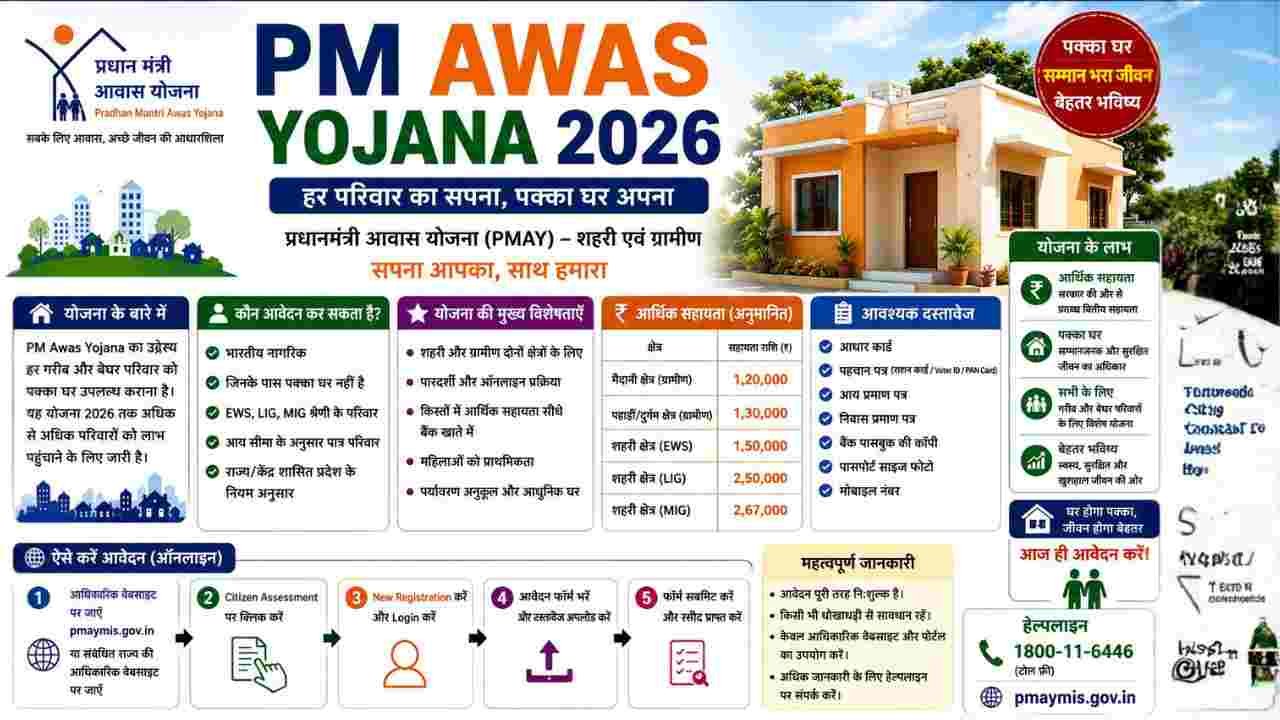




- Economically weaker families
- Low-income groups
- Middle-income families
- Urban poor households
- First-time home buyers
Objective of Flat Yojana
The main objective of affordable flat schemes is to help citizens own safe and permanent homes at affordable prices.
Key goals include:
- Housing for all
- Affordable urban housing
- Slum rehabilitation
- Better living standards
- Financial support for low-income families
- Organized urban development
The government aims to reduce homelessness and improve housing accessibility for economically weaker sections.
Government Flat Yojana 2026 Latest Updates
Several important developments have taken place in affordable housing projects during 2026.
Latest updates include:
- Expansion of affordable housing projects
- New PMAY urban housing approvals
- Online allotment systems
- Aadhaar-based verification
- Digital property tracking
- Housing subsidies for eligible buyers
- Women co-ownership preference
Many states are also launching separate housing projects for lower and middle-income families.
The government continues to promote affordable housing construction in rapidly growing urban areas.
PMAY and Affordable Flats
Most government-backed flat schemes are connected with Pradhan Mantri Awas Yojana Urban (PMAY-U).
Under PMAY Urban, beneficiaries may receive:
- Home loan interest subsidy
- Affordable housing support
- Financial assistance
- Subsidized flat allotment
PMAY has become one of India’s largest affordable housing programs.
Types of Government Flat Schemes
Different categories of housing schemes are available based on income level and location.
Economically Weaker Section (EWS)
Designed for low-income households.
Features may include:
- Lower flat prices
- Government subsidy
- Smaller housing units
Low Income Group (LIG)
Suitable for families with moderate income.
Benefits may include:
- Affordable EMI options
- Subsidized home loans
- Better urban housing access
Middle Income Group (MIG)
Middle-income families may receive interest subsidy benefits under housing schemes.
Eligibility Criteria for Flat Yojana 2026
Eligibility conditions may vary depending on the scheme and state government.
Common eligibility requirements include:
- Applicant must be an Indian citizen
- Family should not own a permanent house
- Aadhaar verification may be required
- Applicant should belong to eligible income category
- Applicant must meet housing scheme guidelines
Some schemes give priority to:
- Women applicants
- SC/ST beneficiaries
- Disabled citizens
- Senior citizens
Income Categories Under Housing Schemes
EWS Category
Generally meant for lower-income households.
LIG Category
Designed for low-income families.
MIG Category
Middle-income applicants may qualify for home loan subsidy benefits.
Income limits vary depending on government notifications and scheme guidelines.
Benefits of Government Flat Yojana
The schemes provide several major benefits.
Affordable Housing
Beneficiaries can purchase flats at lower prices compared to market rates.
Subsidy Benefits
Interest subsidy reduces EMI burden on home loans.
Better Urban Living
Families receive improved housing facilities.
Legal and Organized Housing
Government-approved housing projects improve safety and infrastructure.
Women Empowerment
Many schemes encourage women ownership and joint registration.
Documents Required for Flat Yojana
Applicants generally require the following documents:
- Aadhaar Card
- PAN Card
- Income Certificate
- Residence Proof
- Bank Account Details
- Passport Size Photograph
- Mobile Number
- Property-related documents (if required)
Additional verification documents may be needed depending on the project.
How to Apply for Government Flat Yojana 2026?
Applications can usually be submitted online or offline.
Online Application Process
Step 1
Visit the official housing scheme portal.
Step 2
Select the desired housing scheme.
Step 3
Enter Aadhaar and personal details.
Step 4
Upload required documents.
Step 5
Choose housing project or flat category.
Step 6
Submit application form.
Step 7
Save application or registration number.
Verification is completed by housing authorities.
Offline Application Process
Applicants may also apply through:
- Housing board offices
- Municipal corporations
- Development authorities
- PMAY facilitation centres
- Common Service Centres (CSC)
Offline assistance remains useful for many applicants.
How to Check Flat Yojana Status?
Applicants can track their application status online.
Status Check Process
- Visit official portal
- Enter registration number
- Verify through OTP if required
- View current application status
Common status messages include:
- Under Verification
- Approved
- Pending
- Rejected
- Allotted
Housing Subsidy Under PMAY
One of the major benefits of government housing schemes is the Credit Linked Subsidy Scheme (CLSS).
Under CLSS:
- Home loan interest subsidy is provided
- EMI burden reduces
- Affordable housing becomes easier
Subsidy benefits depend on income category and loan amount.
Smart Cities and Affordable Housing
Affordable housing projects are becoming increasingly connected with Smart City development programs.
Many new projects focus on:
- Better infrastructure
- Public transport connectivity
- Water supply
- Electricity
- Sanitation
- Green housing
Urban development authorities are integrating affordable housing with modern city planning.
Government Housing Boards
Many states operate their own housing boards and development authorities.
Examples include:
- DDA housing schemes
- MHADA projects
- State housing boards
- Urban development authority projects
These organizations regularly launch flat allotment projects for eligible citizens.
Why Affordable Housing is Important
Affordable housing helps improve social and economic stability.
Benefits include:
- Better living conditions
- Increased financial security
- Reduced slum growth
- Improved urban planning
- Better health and sanitation
Home ownership also provides long-term financial security for families.
Common Problems Faced by Applicants
Many applicants still face challenges during the application process.
Verification Delays
Document verification may take time.
Aadhaar Errors
Incorrect Aadhaar details may create problems.
Limited Flat Availability
Demand often exceeds available housing units.
Delayed Construction
Some housing projects face construction delays.
EMI and Loan Issues
Applicants may struggle with loan approval or repayment planning.
Tips for Flat Yojana Applicants
- Use only official portals
- Keep Aadhaar details updated
- Upload correct documents
- Track application regularly
- Avoid fake agents and brokers
- Carefully verify project details
- Understand EMI obligations before applying
Proper verification and planning are important before purchasing any housing unit.
Beware of Housing Scams
Many fake housing advertisements and fraudulent schemes circulate online.
Important precautions:
- Verify project approval
- Avoid unofficial payments
- Check authority registration
- Use trusted government websites
- Confirm allotment procedures officially
Applicants should remain cautious while dealing with agents or brokers.
Public Reactions and Ground Reality
Affordable housing schemes are generally welcomed by middle-class and low-income families.
Positive reactions include:
- Better access to home ownership
- Affordable EMI support
- Improved living standards
- Government-backed security
However, some applicants report concerns related to:
- Delayed possession
- Construction quality
- Limited availability
- Long waiting periods
Experiences may vary depending on the project and location.
Future of Government Housing Schemes
The government is expected to continue expanding affordable housing programs.
Future focus areas may include:
- Smart affordable housing
- Green building projects
- Faster online approvals
- AI-based verification systems
- Improved subsidy models
- Expanded urban housing projects
Housing development remains one of India’s biggest welfare and infrastructure priorities.
Important Tips Before Buying a Government Flat
Before applying for any flat scheme:
- Verify eligibility carefully
- Understand total project cost
- Check EMI affordability
- Read scheme guidelines properly
- Verify construction status
- Confirm legal approvals
Financial planning is essential before purchasing property.
Conclusion
Government Flat Yojana 2026 and affordable housing schemes continue to provide major support to economically weaker, low-income, and middle-class families across India.
Through PMAY Urban, housing boards, and state development authorities, the government is helping citizens access affordable flats, housing subsidies, and organized urban housing projects.
Digital verification systems, Aadhaar integration, online allotment processes, and subsidy support are making affordable housing schemes more transparent and accessible.
Citizens should always apply through official portals, verify housing project details carefully, and maintain proper documents for successful application and allotment.